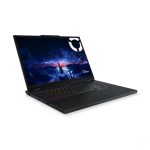
Last week a customer came to me with a simple request. Their Dell Latitude laptop was about six years old, running slower, and running Windows 10. So he wanted to upgrade to something newer with similar specs. Simple, right?
They knew exactly what they wanted. They’d been happy with their Latitude for years. They just wanted a new one.
When I told the customer that Latitude pretty much no longer existed, he looked at me like I’d just said something in a foreign language.
That conversation is what inspired this article. Because that customer isn’t unusual. There have been many more in the last 6 months.
What unfolded with Dell’s branding in 2025 is one of the most spectacular self-inflicted wounds in PC industry history. They killed off names that customers had known and trusted for decades, replaced them with something super confusing, got absolutely hammered for it, and then had to publicly admit they stuffed it up.
There’s an old saying that applies perfectly here: if it ain’t broken, don’t fix it. Dell’s old product names weren’t broken. Customers knew them. Customers trusted them. And Dell fixed them anyway.
Let’s break down exactly what happened.
The Names That Got Killed Off
At CES in January 2025, Dell announced it was retiring its entire lineup of product names in one go. Gone were:
- Inspiron – the everyday consumer range most Australians would recognise
- XPS – the premium, thin-and-light range that consistently topped “best Windows laptop” lists for years. Nothing screamed Dell like XPS
- Latitude – the tough business workhorse found in offices and government departments across the country
- Precision – the heavy-duty workstation range for engineers and content creators
- OptiPlex – the reliable desktop you’d spot in every school and corporate IT room in Australia
Dell merged everything into three new categories: Dell, Dell Pro, and Dell Pro Max, with each further divided into sub-tiers of Base, Plus, and Premium.
What Are the New Dell Laptop Names? (Old vs New)
In 2025, Dell replaced its entire laptop lineup with new names. Here is how the old Dell laptop names map to the new ones:
| Old Dell Name | Replaced By | Who It’s For |
|---|---|---|
| Inspiron (entry) | Dell Base | Students and everyday home users |
| Inspiron (mid-range) | Dell Plus | General consumers needing more performance |
| XPS | Dell Premium | Premium consumer users (now revived as XPS in 2026) |
| Latitude | Dell Pro | Business and corporate users |
| Precision | Dell Pro Max | Engineers, architects, and workstation users |
| OptiPlex | Dell Pro (desktop) | Office and business desktops |
| Alienware | Alienware (unchanged) | Gamers |
So a laptop that was once clearly called the “XPS 15” became “Dell Pro 15 Premium.” Good luck explaining that to a typical user.
Why Dell Did It (And Why the Logic Was Flawed)
Dell’s stated reason was that too many customers felt overwhelmed by the number of product names. Research Dell cited showed that 74% of consumers walked away from purchases because they felt confused or overwhelmed by too many options. Fair enough in theory.
The PC market is also highly competitive, and Apple’s streamlined naming (MacBook Air, MacBook Pro) set a benchmark that Dell appeared eager to follow. To be honest it wasn’t just Dell.
And that is precisely where Dell went wrong.
They looked at Apple and thought: they use Pro and Max, so we’ll use Pro and Max. Simple.
But Apple’s system works because it’s really simple. There’s a MacBook Air and a MacBook Pro. Two laptops. That’s it. You know exactly what you’re getting from the name alone.
Dell, on the other hand, created a grid of nine possible combinations. Three main tiers, each with three sub-tiers. The naming convention was reminiscent of iPhones, which also have base, Pro, and Pro Max models, but Dell then added further suffixes like Plus and Premium on top of that.
The result? Instead of simplifying things, customers and sales people now had to work out the difference between:
- Dell Pro 14
- Dell Pro 14 Plus
- Dell Pro 14 Premium
- Dell Pro Max 14
- Dell Pro Max 14 Plus
- …
Five laptops. All with “Dell” in the name. All with a “14” in the name. Almost impossible to tell apart to a normal consumer without a lookup table.
No PC brand that has tried to copy Apple’s naming approach or marketing has pulled it off. Not one. The reason is simple: Apple’s simplicity works because Apple genuinely has a simple product range, and a brand name unlike anyone else in the industry. You can’t paste a clean naming system on top of a sprawling product catalogue and expect it to feel clean. It just feels like a mess with nicer labels.
Destroying Hard Won Brand Equity
Here’s what made this particularly painful to watch from an industry perspective. The XPS name wasn’t just a product label. It stood for something.
For years, if someone asked for “the best Windows laptop,” XPS was the answer seven times out of ten. It sat alongside Lenovo’s ThinkPad and Apple’s MacBook Pro as one of the few laptop names that actually meant something to consumers. That kind of recognition takes years to build.
Dell threw all of that away in a single announcement.
Replacing “XPS” with “Dell Premium” is like Lenovo deciding to rename the ThinkPad to “Lenovo Business.” Technically descriptive. Completely soulless. And immediately forgettable.
The same applied to Latitude. In Australian corporate circles, Latitude was synonymous with “reliable business laptop.” IT managers knew it, procurement teams specified it, and end users trusted it. Wiping that out and replacing it with “Dell Pro” stripped away all that accumulated trust.
And Precision? Engineers, architects, and video editors had been specifying Precision workstations for decades. The name carried genuine weight in professional circles. Replacing it with “Dell Pro Max” (a name that sounds like it belongs on a commercial printer, not a premium laptop) didn’t carry any of that weight with it.
The Model Number Problem
This wasn’t even Dell’s only naming headache. There’s a longer-running issue that has quietly driven IT departments crazy for years.
Dell has a habit of reusing model numbers across completely different generations of hardware. A model number used in 2013 could show up again on a 2023 machine with entirely different components. For IT teams managing fleets of hundreds or thousands of devices, this creates a nightmare when tracking drivers, warranties, and replacement parts.
The 2025 rebrand was supposed to fix this with a cleaner structure. But given how the rest of the naming rollout went, it’s fair to say most people had bigger things to worry about.
Dell Wasn’t Alone: HP Did It Too
To be fair to Dell, they weren’t the only major PC brand that decided 2024 and 2025 were a good time to shake up perfectly functional product names.
HP quietly did the same thing. And while it hasn’t caused anywhere near the same level of damage, it’s still created its share of confusion.
In May 2024, HP retired several well-known consumer laptop names that customers had recognised for years:
- Spectre – HP’s premium thin-and-light range, gone
- Envy – the popular mid-to-high-end consumer line, gone
- Pavilion – the accessible everyday range, gone
- Dragonfly – HP’s ultra-portable business range, gone
Consumer laptops are now sold under the OmniBook banner. Business laptops kept the EliteBook and ProBook names but got restructured. The EliteBook 800 series became “EliteBook 8,” the 600 series became “EliteBook 6,” and the ProBook 400 series became “ProBook 4.” HP’s gaming brand OMEN was left alone, similar to how Dell left Alienware untouched.
The business-side changes are fairly logical once you understand the numbering system, and at least EliteBook and ProBook are familiar enough names that customers haven’t been completely blindsided.
The consumer side is a different story. Spectre was HP’s answer to the XPS. It was a well-regarded, premium brand with loyal customers. Replacing it with “OmniBook” doesn’t carry the same weight.
Is HP’s rebrand as damaging as Dell’s? No, not even close. HP kept more of the recognisable framework intact, and the changes have been less dramatic. But it’s still another example of a major PC brand looking at what worked and deciding to change it anyway.
If it ain’t broken, don’t fix it. Apparently nobody sent that memo.
What It Actually Looks Like on the Ground
Here’s something you won’t read in a press release.
I work in computer sales. I deal with customers every single day. And I can tell you firsthand that Dell’s 2025 rebrand didn’t just confuse people online, it cost Dell real sales, in real stores, with real customers walking out the door empty-handed or buying something else entirely.
More than a year on, customers are still coming in asking for:
- “A Latitude”
- “An Inspiron”
- “A Mobile Precision”
- “An XPS” – well at least that one’s coming back
When you tell them those names don’t exist anymore, you can see the confusion on their face. Then you try to explain what replaced them.
“It’s now called Dell Pro. Or Dell Pro Max.”
The response is almost always a blank stare. Sometimes it’s a polite “sorry, what?” More often it’s just a look that says they have absolutely no idea what you just said to them.
And that’s fair enough. Dell Pro Max sounds like something you’d name a commercial printer, not a premium laptop. It means nothing to someone who isn’t already deep in the tech weeds.
It’s not just customers who are confused either. Sales consultants and technical staff are still scratching their heads trying to confidently map the old names to the new ones. When the people selling your products aren’t sure what they’re selling, you’ve got a serious problem. Seriously.
The frustrating thing is that decisions like this rarely come from people who spend time on the shop floor. They come from senior managers and marketing executives sitting in offices, looking at Apple’s clean product pages and thinking “let’s do that.” What they don’t see is what happens when a customer walks in, points at a shelf, and has absolutely no idea what they’re looking at.
The Fallout
The reaction from reviewers, customers, and the tech press was swift and brutal. Right from Dell’s CES 2025 announcement, the immediate question from just about everyone was “what’s up with these names?” – and it didn’t get much better from there.
Sales of the rebranded lineup fell short of Dell’s own expectations. Customers shopping for a premium Windows laptop (the people who previously would have gone straight to XPS) were now left confused. Some simply walked away and bought a MacBook or a ThinkPad instead. While Dell was busy rearranging its product labels, HP and Lenovo kept gaining ground in the premium segment.
When your rebrand drives customers to competitors, that’s about as bad as it gets.
Dell Admits It Stuffed Up
Here’s where this story takes a really rare turn.
At CES 2026, Dell reversed course and revived the XPS brand. Dell Technologies vice chairman and COO Jeff Clarke said: “We’re getting back to our roots with a renewed focus on consumer and gaming. XPS is back, better than ever.” Thank Goodness.
But Clarke didn’t stop there. He told attendees directly: “I owe you an apology today. We didn’t listen to you. You were right on branding.“
That is an extraordinary thing for a senior executive of a global corporation to say publicly. It’s almost unheard of in the PC industry. And it tells you everything you need to know about just how badly the 2025 rebrand had gone.
Clarke also acknowledged that the company “underperformed” and “didn’t listen” – and that reviewers and customers had been right all along.
To be fair, admitting a mistake that publicly takes guts. Most companies quietly shuffle the deck chairs and hope nobody notices. Dell came out and said it clearly, and that deserves some credit.
But the lost goodwill and the confused customers? That takes a lot longer to fix than a product name. Personally, I expect a third of long term Dell customers to vote with their wallets and go somewhere else, no matter what Dell does next. And I do not blame them.
What’s Back and What’s Changed
The XPS revival at CES 2026 wasn’t just a name slapped back on old hardware. Dell launched completely redesigned XPS 14 and XPS 16 models with Intel Core Ultra Series 3 processors and some meaningful improvements based on years of customer feedback:
- Physical function keys are back, replacing the widely-criticised capacitive touch bar that had frustrated users since 2022
- The XPS logo now appears on the front lid for the first time – something reviewers and fans had been asking for years
- The seamless all-glass touchpad is gone, replaced with one that has subtle etching so you can actually see where the trackpad is
- Both models are Dell’s thinnest ever at 14.6mm, and significantly lighter than their predecessors
- Battery life claims are substantial – up to 27 hours of streaming or 40+ hours of local video playback
The XPS 13 is expected to follow later in 2026 as the most affordable XPS yet.
Dell is keeping “Dell” for its mid and entry-level consumer laptops, and “Dell Pro” sticks around for the business range – so it hasn’t done a complete 180. But XPS is back where it belongs at the top of the consumer lineup, and that’s the most important part for the time being.
What This Means for Aussie Buyers Right Now
If you’re shopping for a Dell laptop today, here’s a quick cheat sheet:
- XPS 14 / XPS 16 – back as the premium consumer picks. These are the ones to look at if you want the best Dell has to offer.
- Dell (Base / Plus / Premium) – everyday consumer laptops covering the ground that Inspiron used to.
- Dell Pro – the business range, carrying on the Latitude legacy in all but name. Lots of lost buisness here.
- Alienware – gaming laptops. These were never touched by the rebrand and remain unchanged.
One tip worth knowing: if you spot a “Dell 14 Premium” or “Dell 16 Premium” at a retailer on on Dell’s own website, that’s a leftover from the 2025 rebrand – effectively the same positioning as the XPS, just with the old confusing label. You may find decent deals on those models now that the XPS name is back and taking the spotlight.
Use tools like Staticice and Google Shopping to compare prices across Australian retailers before you buy.
Final Thoughts
Dell’s 2025 rebrand is a textbook example of a company trying to solve a problem that didn’t really exist, and creating a much bigger one in the process.
Yes, Dell’s old naming system had some quirks. But customers knew what XPS meant. They trusted Latitude. They understood Inspiron. Replacing all of that with an overcomplicated grid of Pro, Max, Plus, and Premium, in a silly attempt to copy Apple’s simplicity was never going to land well.
The people who dreamed this up clearly weren’t talking to the people on the shop floor. They definitely were not listening to the customers who walked in every day asking for products by their proper names. And they paid the price for it.
HP has made similar moves, though with less collateral damage. The lesson for the entire industry should be clear: your customers don’t want you to be Apple. They want you to be you – reliably, consistently, and with names they can actually remember.
If it ain’t broken, don’t fix it.
To Dell’s credit, they admitted the mistake faster than most companies ever would. The new XPS lineup looks genuinely impressive, and hopefully marks a return to what made Dell great in the premium space.
Sometimes you learn the hard way. Let’s hope they don’t forget the lesson.
Looking for a Dell laptop? Check back soon. I’ll be reviewing the new XPS 14 and XPS 16, along with several models from the current Dell Pro business range. In the meantime, you can browse my Dell laptop reviews for models I’ve already covered.