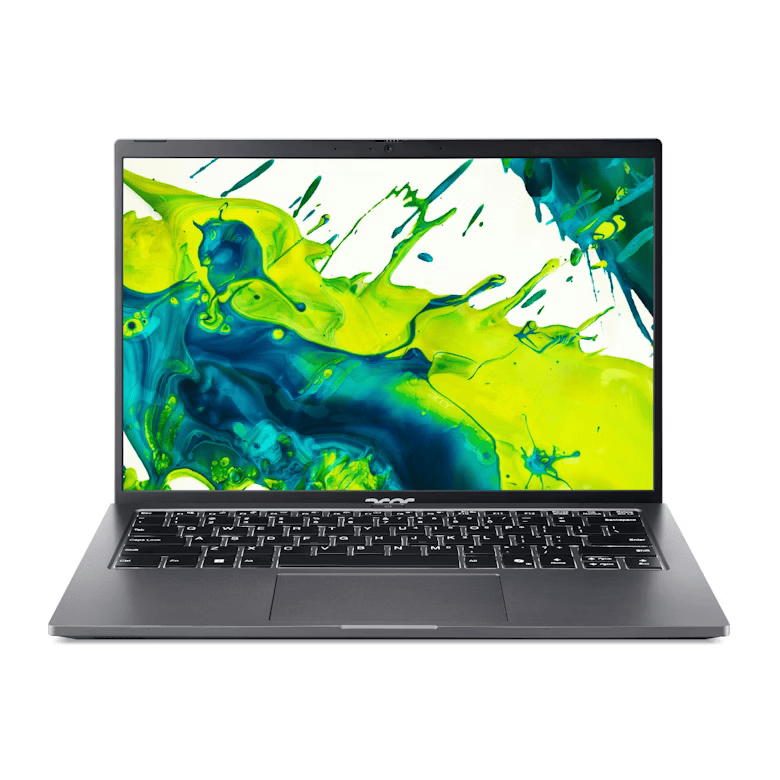
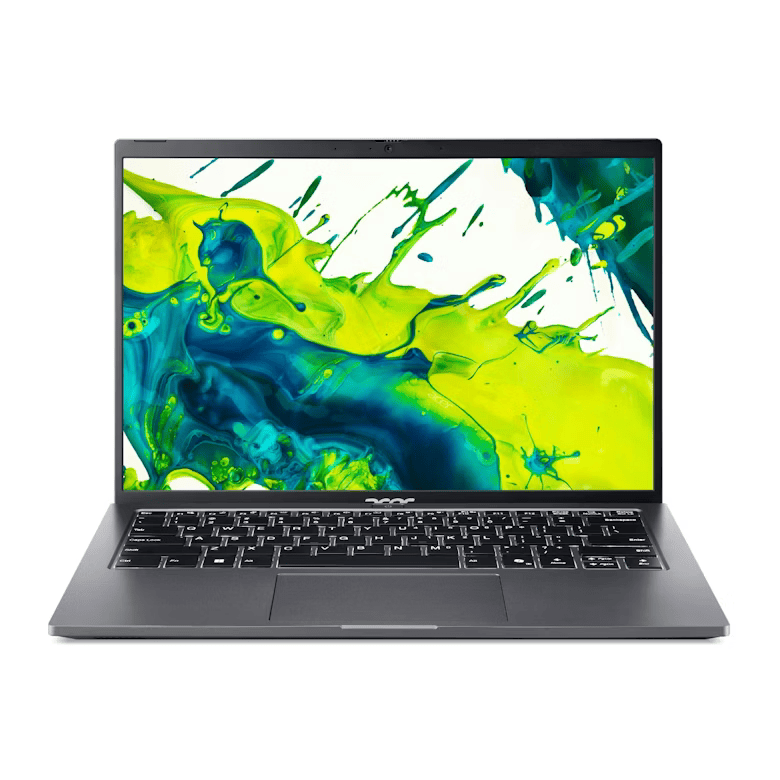
Last month I reviewed the Acer Aspire Go AG15-72P-55HX, a budget 15.6-inch laptop with an Intel Core Ultra 5 processor and 8GB of RAM, priced at $798 from Harvey Norman. This time around we’re looking at its smaller and more capable sibling, the Acer Aspire Go 14 AG14-71M-77H7 (NX.JFWSA.002). It’s a Harvey Norman exclusive at $898 on sale with a $600 saving badge.
For just $100 more than the 15-inch model, you’re getting some meaningful upgrades: a more powerful Intel Core Ultra 7 H-series processor, double the RAM, and a better 14-inch 16:10 display. On paper, that’s genuinely good value.
But Acer has continued its pattern of being a bit too quiet about some key specifications, which is something buyers need to know about before committing.
Pros
- Intel Core Ultra 7 155H Processor
- 16GB of RAM
- Reasonable weight
Cons
- No backlit keyboard
- Fan noise under load
- Battery capacity not specified
Key Specifications
- Display: 14″ WUXGA (1920 x 1200), IPS, 16:10, 60Hz, 100% sRGB, matte
- Processor: Intel Core Ultra 7 155H (16 cores, 22 threads, up to 4.8GHz, Meteor Lake)
- Memory: 16GB DDR5 (1x16GB, single channel)
- Storage: 512GB M.2 NVMe PCIe 4.0 SSD
- Graphics: Intel Graphics (integrated)
- NPU: Intel AI Boost
- Operating System: Windows 11 Home
- Wireless: Realtek RTL8852BE Wi-Fi 6 (802.11ax), Bluetooth 5.2
- Ports: 2x USB-C 3.2 Gen 2 (10Gbps, DisplayPort, Power Delivery), 2x USB-A 3.2 Gen 1 (5Gbps), 1x HDMI, 1x RJ-45 ethernet, 1x microSD, 1x 3.5mm audio
- Webcam: 1080p
- Audio: Two speakers, two microphones
- Battery: Capacity not specified
- Weight: 1.50kg
- Dimensions: 31.98 x 22.78 x 1.99cm
- Keyboard: Full-size, no backlight
- Security: No fingerprint reader
- Power: 65W
- Colour: Iron
- Part Number: NX.JFWSA.002
- Price: $898 at Harvey Norman (save $600)
How Does It Compare to the Aspire Go 15?
If you’re cross-shopping with my recently reviewed Acer Aspire Go AG15-72P-55HX, here’s the short version of what the extra $100 gets you:
- Processor: Core Ultra 7 155H (H-series, 16 cores) vs Core Ultra 5 120U (U-series, 10 cores)
- RAM: 16GB vs 8GB
- Display: 14″ 16:10 vs 15.6″ 16:9
- Form factor: Smaller and more portable vs larger display
For most users, this is a meaningfully better laptop for not much more money. The H-series processor in particular makes a real difference for anything beyond basic tasks, and the 16GB of RAM addresses the most significant limitation of the cheaper model.
If you want the larger display and don’t mind the older processor or lower RAM, the cheaper Aspire Go 15 still has its place. But pound for pound, this Aspire Go 14 represents better value at $898.
What Acer Still Isn’t Telling You
There’s still one important spec missing: battery capacity (Wh) is not specified.
When manufacturers stay quiet about battery capacity, it’s typically because the number isn’t impressive. For a 14-inch laptop with a power-hungry Core Ultra 7 H-series processor, you’d want at least 55Wh to deliver decent battery life. The reasonable assumption here is that battery capacity sits somewhere between 40 and 55Wh, which would explain the underwhelming real-world runtime we’d expect.
If extended battery life is critical to your purchase decision, this is worth knowing.
If detailed specs matter to you before purchase, this is something to consider.
Design and Build Quality
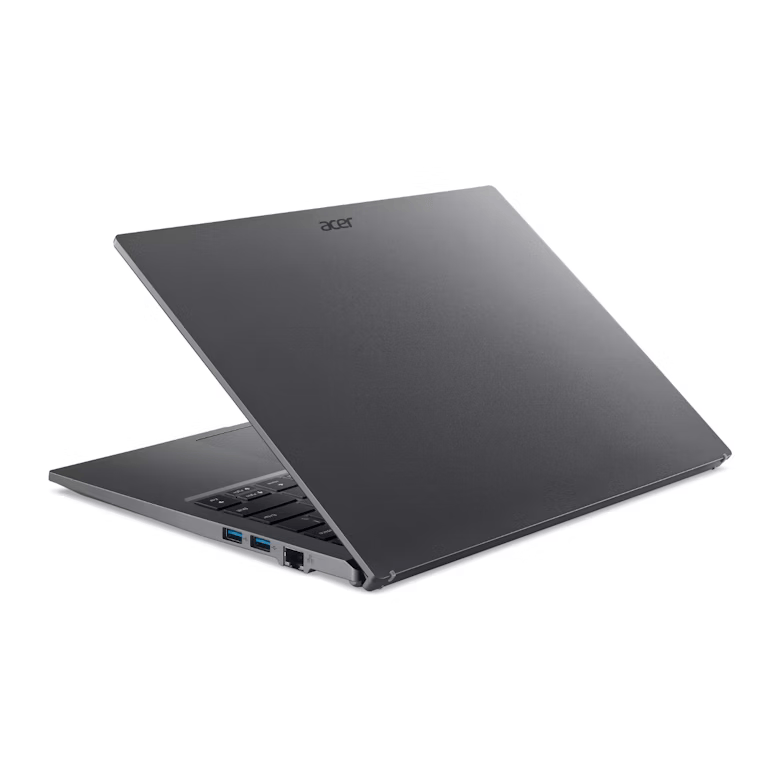
The Aspire Go 14 comes in an Iron colour finish, which is Acer’s slightly more premium-sounding name for a darker silver grey. At a confirmed 1.50kg it’s reasonably light for a 14-inch laptop with an H-series processor, and noticeably more portable than the 15-inch Aspire Go I reviewed last month.
The build is plastic, as expected at this price point. It’s reasonably solid for daily home or student use but won’t inspire confidence for daily commuting in and out of bags. The compact dimensions of 31.98 x 22.78 x 1.99cm make it easy to slip into most laptop bags.
There’s no backlit keyboard and no fingerprint reader, both of which are expected omissions at this price. The microSD card reader is a practical inclusion, though a full-size SD reader would have been more useful for photographers or anyone working with cameras.
The inclusion of a physical RJ-45 ethernet port is genuinely unusual at this price and form factor. Most 14-inch budget laptops drop the ethernet port to save space and cost. For students or home users who want a reliable wired connection, this is a real plus.
Display
The 14-inch FHD+ (1920 x 1200) IPS display with 16:10 aspect ratio is a genuine highlight of this laptop and one of the bigger surprises in our review. Acer has confirmed 100% sRGB colour coverage, which is exceptional for a laptop at this price point.
To put that in context, most budget laptops at $898 ship with 45% NTSC or 62.5% sRGB panels that produce flat, washed-out colours. The Aspire Go 14 instead delivers full sRGB coverage, which means vibrant and accurate colours suitable for everyday productivity, content consumption, and even light creative work.
The matte coating manages reflections well in typical indoor environments, and the 16:10 aspect ratio gives you more vertical screen space than the older 16:9 panels common on competing budget laptops. That extra vertical space is genuinely useful for documents, spreadsheets, and web browsing.
Acer hasn’t published brightness figures for this display, which is the one remaining unknown. For a 14-inch laptop at this price, expect somewhere between 250 and 300 nits, which is acceptable indoors but limited in brighter environments.
The 100% sRGB coverage in particular is a real standout feature and changes the value proposition of this laptop considerably. It’s the kind of spec we usually only see on more premium machines.
Performance
The Intel Core Ultra 7 155H is a capable processor with 16 cores and 22 threads. It’s an H-series chip designed for performance rather than just efficiency, which makes it a more powerful option than the U-series chips found in most budget laptops.
A few things to know about this processor in 2026:
- It’s a Meteor Lake chip, which launched in late 2023. That makes it about two and a half years old by current standards.
- Intel has since released Lunar Lake and Arrow Lake processors that are more efficient and capable in some workloads.
- For everyday productivity tasks, web browsing, video calls, light photo editing, and general multitasking, the 155H is still genuinely capable.
- It’s not the latest silicon, but it’s also not slow.
The 16GB of DDR5 RAM is a meaningful step up from the 8GB found on the cheaper Aspire Go 15. However, it’s configured as a single 16GB stick in single-channel mode, which is expected at this price point given how dramatically RAM prices have risen recently. Single-channel limits memory bandwidth and integrated graphics performance compared to a dual-channel setup, as I’ve covered in my Dual-Channel RAM article. With current RAM pricing what it is, adding a second stick to enable dual-channel mode is no longer a cheap upgrade – it’s something to consider carefully rather than do automatically.
The 512GB PCIe 4.0 NVMe SSD delivers fast load times and snappy file access.
Acer notes that fan noise can become noticeable under sustained load, which is typical for thin 14-inch laptops with H-series processors trying to manage thermals in a compact chassis.
Keyboard and Trackpad
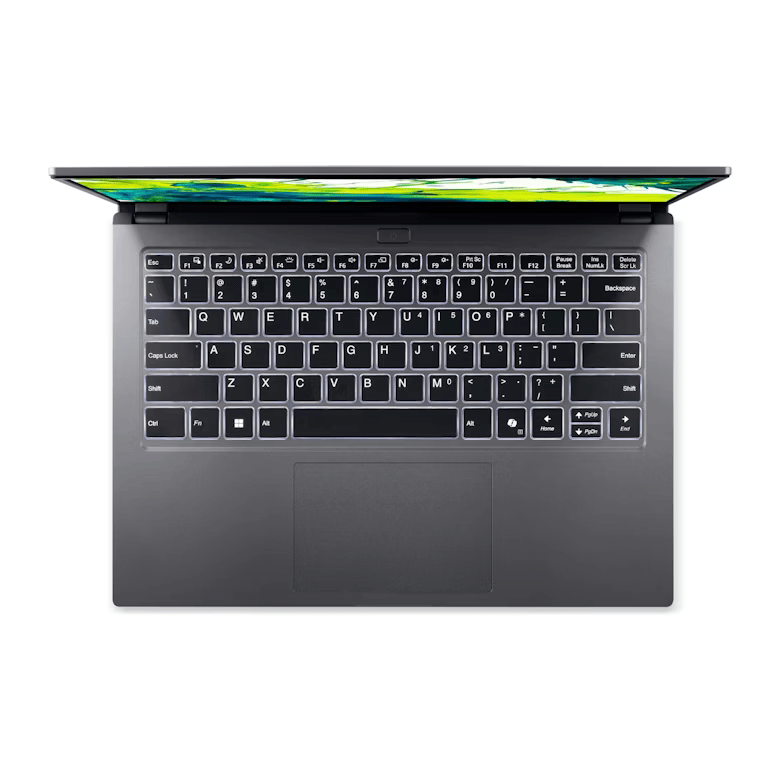
The keyboard feel on Acer Aspire Go laptops has been consistently underwhelming, and there’s no reason to expect this 14-inch model to be different. It’s functional but doesn’t deliver a satisfying typing experience for extended sessions. Key travel and feedback are below average for what we typically see at this price.
There is no backlight, so working in dim environments will be challenging.
The Microsoft Precision Touchpad certification (a common Acer feature in this range) suggests reasonable trackpad behaviour and gesture support.
Connectivity
The port selection is reasonable for a 14-inch laptop at this price:
- 2x USB-C 3.2 Gen 2 (10Gbps) with DisplayPort and Power Delivery support
- 2x USB-A 3.2 Gen 1 (5Gbps)
- 1x HDMI
- 1x RJ-45 ethernet port – genuinely unusual at this size and price
- 1x microSD card reader
- 1x 3.5mm audio combo jack
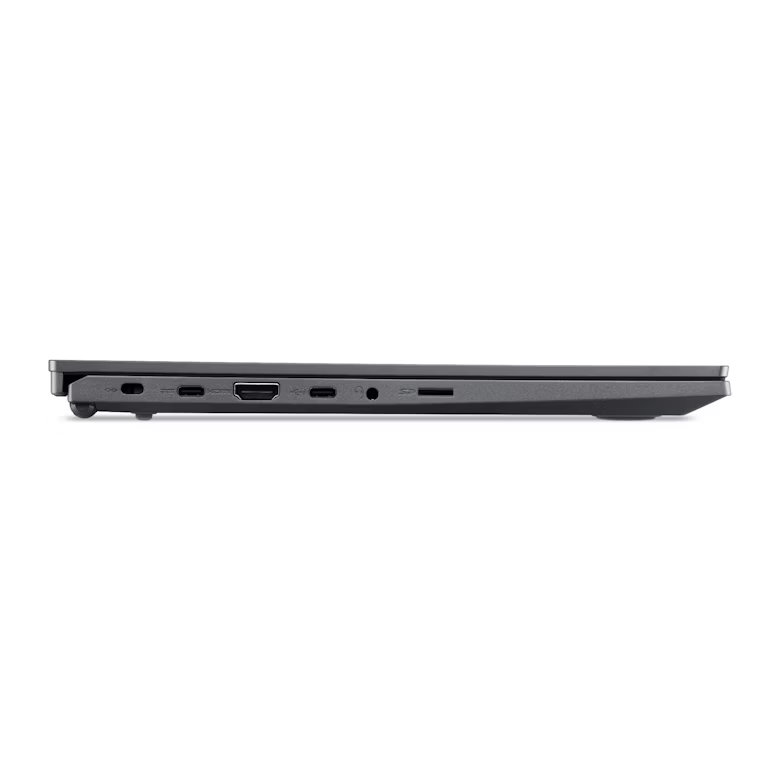
Having two USB-C ports with full Power Delivery and DisplayPort support is a strong inclusion at $898. You can charge from either port and connect an external display without juggling adapters. That kind of flexibility is more often associated with premium business laptops than budget consumer machines.
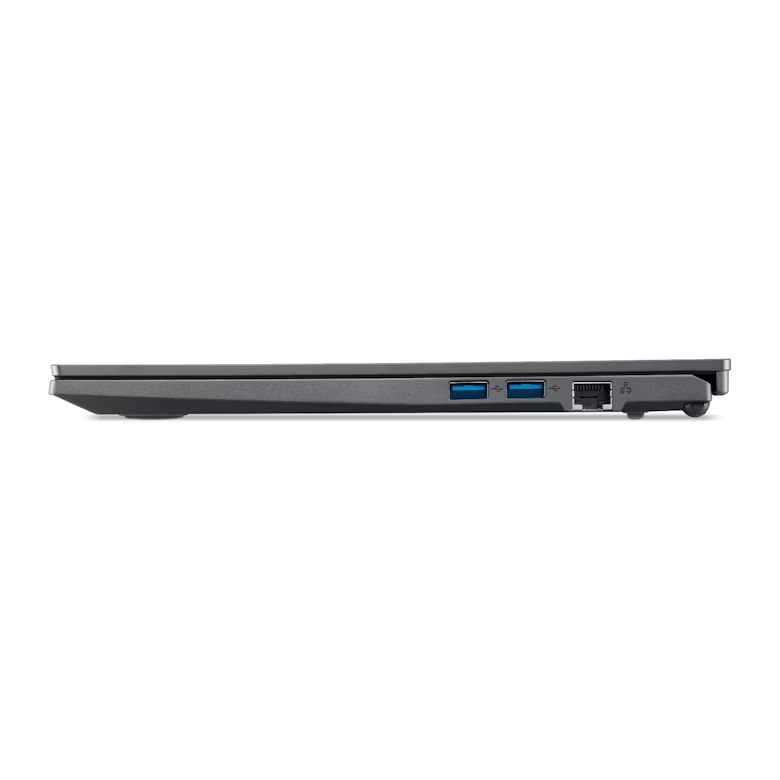
The ethernet port deserves another mention because it’s genuinely unusual at this size and price. For students living in dorms with wired connections, or home users who prefer the stability of ethernet, this is a real practical positive.
The wireless adapter is a Realtek RTL8852BE delivering Wi-Fi 6 and Bluetooth 5.2. Realtek wireless is less reliable than Intel alternatives in congested network environments, but for most home and student users it’ll be perfectly adequate.
Battery Life
Without a published battery capacity figure, real-world performance estimates have to be educated guesses. For an Intel Core Ultra 7 155H in a 14-inch chassis, you’d typically expect somewhere between 40Wh and 55Wh of battery capacity.
Acer flags that real-world battery life can fall short of optimistic claims, which is consistent with what we see across the industry. For a laptop with a power-hungry H-series processor, realistic expectations should be around 5 to 7 hours of typical use covering web browsing, documents, and video calls.
That’s adequate for a typical school or work day with some charging access available, but not class-leading. The 65W power adapter is reasonable in size for carrying.
Speakers
Acer flags speakers as a known weak point on this laptop, and that’s consistent with most budget Aspire Go models. The two-speaker setup is fine for video calls and basic media playback at moderate volume, but anything beyond that will reveal the lack of depth and bass. Headphones or external speakers are recommended for any serious media use.
The Price Story
The Aspire Go 14 AG14-71M-77H7 was priced lower around two months ago, so the current $898 sale price isn’t quite the bargain it might appear. This is part of the broader pattern of laptop price increases I’ve been tracking across the Australian market.
I have covered the underlying drivers in my How AI is Pushing Up the Cost of Computers and Parts article and the broader price trend in my Warning: Laptop Prices Are About to Jump 10-20% post from December 2025. Prices have shifted more than I have originally predicted, and unfortunately they’re unlikely to come back down anytime soon.
At $898 in current market conditions, this laptop still represents reasonable value for what you’re getting, particularly compared to similarly priced competitors with weaker specifications. But it’s worth knowing that this is the new pricing reality rather than a genuine sale.
Pros
- Intel Core Ultra 7 155H is a capable 16-core H-series processor
- 16GB DDR5 RAM
- 14-inch FHD+ display with 100% sRGB and 16:10 aspect ratio is excellent at this price
- Dual USB-C ports with Power Delivery and DisplayPort
- Physical RJ-45 ethernet port – unusual at this size and price
- 1080p webcam is a step up from the 720p on most budget laptops
- 512GB PCIe 4.0 NVMe SSD
- microSD card reader
- Reasonable weight at 1.50kg
- Reasonable pricing at $898 for the spec on offer
Cons
- Battery capacity not specified by Acer
- 16GB RAM runs in single-channel mode
- No backlit keyboard
- No fingerprint reader
- Core Ultra 7 155H is now over two years old as silicon
- Keyboard feel is underwhelming
- Speakers are weak
- Fan noise under sustained load
- Realtek Wi-Fi 6 is less reliable than Intel alternatives
- Harvey Norman exclusive means no Officeworks Price Beat option
Final Verdict
The Acer Aspire Go 14 AG14-71M-77H7 is a meaningfully better laptop than the cheaper Aspire Go 15 i reviewed last month, and the $100 premium is well spent. The Core Ultra 7 H-series processor, 16GB of RAM, and the standout 100% sRGB display make this a real step up for everyday use. The 14-inch 16:10 form factor is more practical for productivity than the older 16:9 panels on competing budget laptops, and at 1.50kg it’s reasonably portable.
The 100% sRGB display in particular is genuinely unusual at this price point and changes the value proposition considerably. Combined with dual USB-C ports, a 1080p webcam, and a physical ethernet port, this laptop offers some features you’d more typically find on premium business machines.
The limitations are real but mostly expected at this price point. The Meteor Lake processor isn’t the latest silicon, the speakers and keyboard feel are below average, and the single-channel RAM configuration limits the upgrade path given current memory prices. The lack of a backlit keyboard at $898 is also a corner cut that shouldn’t have been necessary. Acer’s continued silence on battery capacity is the one remaining concern that buyers should factor in.
For a student or home user who wants a capable everyday laptop with a powerful processor, solid colour-accurate display, and good port selection, the Aspire Go 14 represents genuinely reasonable value at $898 in today’s market. Just go in knowing that battery life will likely be modest and the single-channel RAM means you’re getting most but not all of the performance the spec sheet suggests.
If you’re still working out what to prioritise in a laptop at this price point, my Student Laptop Buying Guide is worth a read.