For many years, the conversation went something like this: “I’d love a MacBook, but they’re just too expensive.” A decent Windows laptop at $800 to $1,200 was always the practical choice, and Apple simply wasn’t in that conversation.
The all new MacBook Neo changes that. At $899 for the 256GB model and $1,099 for the 512GB model, Apple has stepped into territory it has never played in before, and a lot of Aussies are now asking the obvious question – is the MacBook Neo actually worth it, or can a Windows laptop from HP, Dell, ASUS, or Lenovo give you more for your money?
The simple answer is: it all depends on who you are and how you use a laptop. Let me break it down so you find the answer you are looking for.
What You’re Comparing
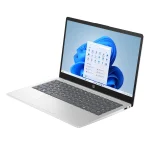
At the $799 to $1,099 price point in Australia, you’ll find Windows laptops from HP, ASUS, Dell, Acer, and Lenovo at major retailers like JB Hi-Fi and Harvey Norman or the manufacturers directly. These are everyday laptops running Windows 11, typically powered by Intel Core or AMD processors.
On the other side, you have the MacBook Neo – Apple’s brand new entry-level Mac, powered by the A18 Pro chip (the same chip from the iPhone 16 Pro), running macOS, and starting at $899. Students can get it even cheaper at $749 through Apple’s Education Store.
Both options sit in a similar price bracket. But as you’ll see, they are very different machines.
Side-by-Side Comparison
| MacBook Neo | Typical Windows Laptop ($799–$1,099) | |
|---|---|---|
| Starting price | $899 (256GB) / $1,099 (512GB) — EDU: $749 / $949 | $799–$1,099 |
| Processor | Apple A18 Pro | Intel Core i5/i7 or AMD Ryzen 5 |
| RAM | 8GB (not upgradeable) | 8GB–16GB (sometimes upgradeable) |
| Storage | 256GB or 512GB SSD | 256GB–512GB SSD |
| Display | 13-inch, 2408×1506, sRGB | 14–15.6 inch, 1080p or 1200p, sRGB |
| Claimed Battery life | 11–16 hours | 5–10 hours |
| Ports | 2x USB-C (1x USB 3, 1x USB 2), headphone jack | Multiple USB-A, USB-C, HDMI, sometimes SD card |
| Weight | 1.23 kg | 1.39–2.0 kg |
| Operating system | macOS | Windows 11 (or Chrome OS) |
| Build quality | Aluminium unibody | Mostly plastic |
| Software updates | 7+ years expected | Typically 4–5 years |
| Resale value | Strong | Low to moderate |
What Your Money Actually Buys in the Windows Market Right Now
This is where things get interesting – and a little inconsistent. The Windows laptop market at this price range is a mixed bag, and it pays to know what you’re looking at before you buy.
At the $799 to $899 mark, the quality varies enormously. Some laptops at this price still ship with entry-level Pentium or Athlon processors, which are underpowered even for basic everyday use. Others in the same price range come with proper Intel Core i5 or AMD Ryzen 5 processors, 16GB of RAM, and 512GB of storage – often because they’re discounted from a higher original price or the models are being discontinued. The difference in real-world performance between these two ends of the spectrum is significant, so it’s worth checking the processor and RAM carefully before you buy rather than just going by price alone.
A few other things to watch for at this price point:
- Windows 11 Home S – some cheaper laptops ship with this restricted version of Windows, which only allows apps installed from the Microsoft Store. Most people will want to switch to the full version of Windows 11, which is free but requires an extra step that many buyers don’t realise upfront.
- 4GB of RAM – still appears on some $799 laptops in 2026. It’s not enough to run Windows 11 comfortably and should be avoided entirely.
- Pentium Silver and Athlon Silver processors – these are very much entry-level chips. You’ll feel the limitations quickly, especially as websites and apps get heavier over time.
- eMMC storage – found on some budget models and Chromebooks, it’s noticeably slower than a proper NVMe SSD. Worth checking the fine print.
- Chrome OS – at the $1,099 mark you’ll also find Chromebooks sitting alongside Windows laptops. Chrome OS is fine for web browsing and Google apps, but it won’t run standard Windows or Mac software, which catches a lot of buyers off guard.
On the other hand, when you find a well-specced Windows laptop at $899 – particularly one that’s been discounted from a higher price – you can get 16GB of RAM, 512GB of storage, and a capable processor for the same money as the MacBook Neo. That’s a genuine advantage on paper. The trade-offs are usually build quality (plastic chassis), battery life, and weight compared to the Mac.
At the $999 mark, you also start seeing touchscreen 2-in-1 convertible laptops – machines that can flip into tablet mode. That’s something the MacBook Neo simply can’t do, and it’s worth factoring in if that flexibility appeals to you.
Where Windows Laptops Win
1. You can get more RAM for the money
If you browser Harvey Norman at the moment, you will find two deals at $899 – the HP Ryzen 5 and the ASUS VivoBook – both come with 16GB of RAM. The MacBook Neo is stuck at 8GB with no upgrade path. For heavier multitasking, 16GB gives you noticeably more headroom.
2. More ports, less hassle
Most Windows laptops at this price will give you USB-A ports (the standard rectangular ones most accessories use), a full-size HDMI port, and sometimes an SD card slot. The MacBook Neo gives you two USB-C ports – and one of them is USB 2 speed, which is very slow for anything other than charging. If you connect accessories regularly, a Windows laptop is far less fiddly out of the box.
3. Bigger screens at this price
Most Windows options here come in 14-inch or 15.6-inch sizes. The MacBook Neo is a 13-inch. If screen size matters – for spreadsheets, streaming, or general comfort – Windows gives you more real estate for the same money.
4. More storage at entry level
Several Windows laptops at $799 and $899 include 512GB SSD as standard. The $899 MacBook Neo starts at just 256GB, which is tight once macOS takes its share.
5. Windows-only software
Some workplaces, industries, and games simply don’t support Mac. If you need specific Windows software, the decision is already made for you.
Where the MacBook Neo Wins
1. Battery life isn’t even close
Apple claims up to 16 hours of video streaming and 11 hours of web browsing – these are manufacturer estimates, so real-world use will be shorter. In practice, expect somewhere between 8 and 12 hours depending on what you’re doing. Windows laptops at this price typically claim 5 to 10 hours on the box, but manufacturer estimates for Windows laptops are notorious for being optimistic. Real-world battery life on most Windows laptops at this price is closer to 3 to 5 hours. For students and commuters, this difference is huge.
2. Build quality is in a different league
Most Windows laptops at this price are built from plastic. The MacBook Neo has an aluminium unibody chassis – the same premium construction you’d expect from a far more expensive laptop. It feels solid, looks great, and is built to last. The four colour options (Silver, Blush, Citrus, and Indigo) are a bonus.
3. The A18 Pro chip is fast and efficient
The A18 Pro handles everyday tasks without fan noise, without getting hot, and without chewing through the battery. Web browsing, documents, video calls, spreadsheets – it flies through all of it. This efficiency is directly why the battery life is so impressive.
4. macOS is clean from day one
Windows laptops at this price often come loaded with bloatware. macOS arrives clean. Apple also supports its devices with software updates for many years – a MacBook Neo bought today should still be getting updates well into the 2030s.
5. Resale value holds up
Macs hold their value significantly better than Windows laptops. A three-year-old MacBook still sells for a solid price on Facebook Marketplace or Gumtree. A three-year-old $999 Windows laptop? Not even close.
6. Great for iPhone users
If you’re already using an iPhone, the MacBook Neo slots right in. AirDrop, iPhone Mirroring, iMessage on the desktop, Handoff – it all just works. For Android users, this advantage doesn’t apply.
Who Should Buy the MacBook Neo?
The MacBook Neo makes a lot of sense if you:
- Are a student who needs a reliable, long-lasting laptop for school or uni (and the EDU pricing makes it even more compelling – $749 for the 256GB model and $949 for the 512GB model through Apple’s Education Store)
- Already use an iPhone and want everything to work together smoothly
- Prioritise battery life above everything else
- Want a premium-feeling, lightweight laptop without paying MacBook Air prices
- Mostly do everyday tasks: browsing, emails, documents, streaming, and video calls
- Value build quality and long-term software support
Who Should Stick with a Windows Laptop?
A Windows laptop is the better call if you:
- Need 16GB of RAM and don’t mind the larger, heavier chassis – the Harvey Norman deals at $899 are genuinely strong value
- Rely on Windows-only software for work or study
- Connect a lot of accessories and don’t want to deal with adapters
- Want a larger screen without spending more
- Need a touchscreen or 2-in-1 design
- Are a PC gamer
The Bottom Line
The Windows laptop market at this price is a mixed bag. There are some genuinely strong deals right now – particularly the HP Ryzen 5 and ASUS VivoBook at Harvey Norman, both discounted to $899 with 16GB of RAM and 512GB storage. At the other end, there are laptops like the $1,099 HP with a Pentium Silver processor that represent poor value and should be avoided entirely.
What the MacBook Neo offers is something different: a premium, lightweight, long-lasting laptop with an excellent build and a clean software experience – at a price Apple has never offered before. It doesn’t win on raw specs alone, but it delivers where it counts for most everyday users.
If you’re a light to moderate user, a student, or someone already invested in the Apple ecosystem, the MacBook Neo is very hard to argue against at $899 – and at $749 with EDU pricing, it’s even harder.
If you need more power, more ports, or Windows-specific software, a well-specced HP or ASUS at a similar price – especially when on sale – will serve you better.
Neither choice is wrong. It just comes down to what matters most to you.